Protein might be the most talked-about nutrient in food right now, stamped on flapjacks, yoghurts, even bread that never used to carry a protein claim at all. This post looks at what protein actually does, how animal and plant protein really compare, how much you genuinely need, why the marketing is everywhere, and a quick myth about timing that comes up a lot.
What protein actually is, and what it’s doing in your body
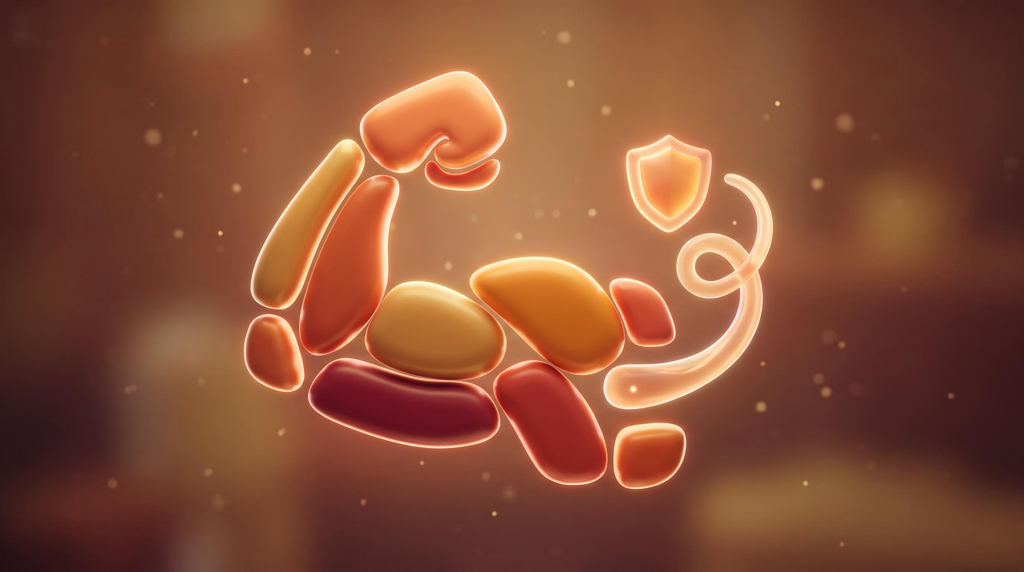
Protein is one of the three macronutrients your body needs from food, alongside fat and carbohydrate, nutrients you need in relatively large amounts every day just to function. Protein’s job is different from the other two: it’s less about fuel, more about building and maintaining you.
When you eat protein, whether that’s chicken, lentils, or milk, your digestive system breaks it down into amino acids, the building blocks your body reassembles into whatever it needs. There are twenty types. Nine are essential, meaning your body can’t make them itself, so they have to come from food. The other eleven your body produces on its own.
Muscle repair is the job most people associate with protein, but it’s a continuous background process, not something that switches on only at the gym, ordinary daily movement, walking, carrying shopping, even standing, wears down and rebuilds muscle tissue constantly. Protein also makes enzymes, which speed up the chemical reactions that keep you alive, including digestion itself; supports your immune system through antibodies; helps produce hormones like insulin, which regulates blood sugar; and acts as transport, haemoglobin being the protein that carries oxygen around your body in your red blood cells. It can be used for energy in genuine need, prolonged fasting or very low carbohydrate intake, but that’s a backup role, not its main one. It also gives physical structure to you: collagen in your skin, keratin in your hair and nails.
Because of everything it does, protein is relevant to everyone, every day, not just people who go to the gym. Genuine deficiency is uncommon in the UK for people eating a varied diet, so this isn’t something most people need to actively worry about. It’s found across meat, fish, eggs, dairy, beans, lentils, tofu and nuts, and there’s no single ‘best’ source, what matters most is getting enough overall from foods that fit your diet.
Animal protein vs plant protein: what ‘complete’ and ‘incomplete’ actually mean
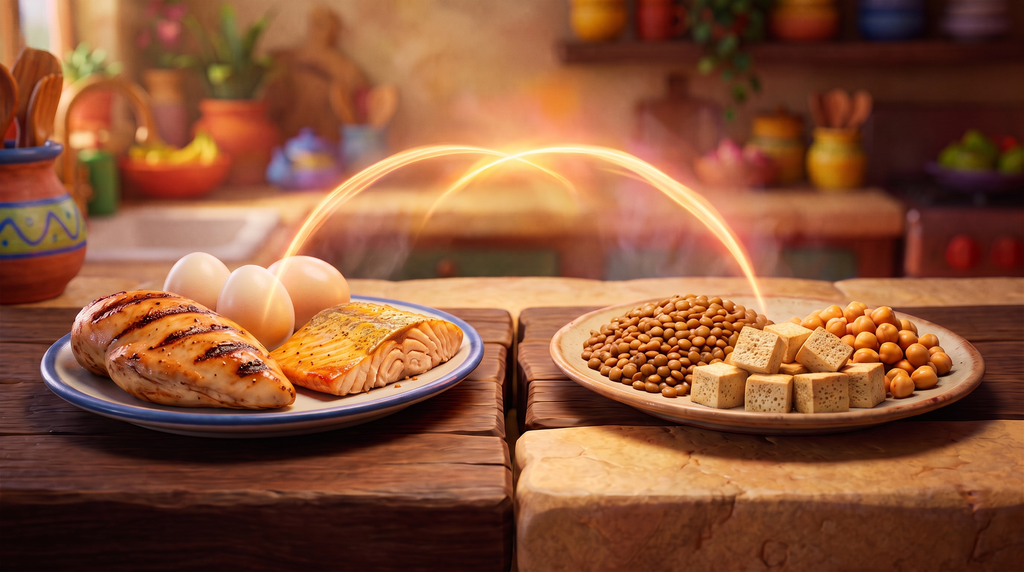
You’ve probably heard some version of this: animal protein is complete, plant protein is incomplete, animal protein has a higher biological value, you can’t build real muscle without meat, or you need to combine foods like rice and beans at the same meal to get a full protein profile. There’s a grain of truth in some of this, but most of it has outlasted the science behind it.
Scientists compare a food’s amino acid profile against a reference protein, a benchmark of exactly what the human body needs. Most animal protein matches that pattern closely across the board, earning the label complete. Most plant protein comes up a little short on one particular amino acid, its limiting amino acid, which is why it’s labelled incomplete. That’s not a statement about overall quality, just about that one amino acid.
You might also see the older term biological value, essentially the same idea by another name, how well your body can actually use a protein once it’s digested, now largely replaced by the reference protein comparison.
Completeness matters more at the level of a single meal, and specifically for one amino acid: leucine, which is the main trigger for muscle protein synthesis, the process your body uses to build and repair muscle. Gram for gram, most animal proteins contain more leucine than most plant proteins, and some plant proteins are also less digestible, meaning less of their protein is actually absorbed. Together, this means a typical serving of an animal protein tends to trigger a slightly larger muscle protein synthesis response than a typical serving of a single plant protein eaten alone (van Vliet, Burd and van Loon, 2015, Journal of Nutrition). This is a difference in how much one meal triggers, not evidence that muscle can’t be built on a plant-based diet: eating a larger portion, combining plant proteins, or eating more frequently across the day closes the gap.
It also doesn’t mean you need to pair foods like rice and beans in the same meal. Your body actually draws on amino acids from everything you’ve eaten across the whole day, not meal by meal, so if you’re eating plant-based, you can get all the complete protein you need without meat, it just takes a bit more variety and a little more overall.
Plant protein also brings more to the plate than amino acids alone: beans, lentils and whole grains come with fibre, phytonutrients and antioxidants that animal protein sources don’t offer. Some plant foods are even naturally complete on their own, no combining needed, tofu, edamame, quinoa, and mycoprotein (the fungus-based protein behind products like Quorn) among them. So is animal protein really better, plant protein worse? Not quite, it comes down to understanding what complete and incomplete actually mean, and building your plate with that in mind, whatever you choose to eat.
How much protein do you actually need?
There’s a figure the UK government publishes for exactly this, the Reference Nutrient Intake (RNI), the amount of a nutrient that meets the needs of nearly everyone in a population group. For protein, the UK figure is 0.75 grams per kilogram of body weight per day. You’ll sometimes see 0.8 grams per kilogram used, this is a rounding rather than a different UK standard.
In practice, that’s around 56 grams a day for an average adult man (working from a 75kg reference weight) and around 45 grams a day for an average adult woman (60kg reference weight). Here’s the part most people don’t expect: national dietary survey data suggests the average UK man is actually eating around 85 grams of protein a day, and the average woman around 67 grams, roughly 38 to 57 percent above the reference amount, depending on age and sex. That overconsumption isn’t a one-off finding, it’s the established pattern in UK survey data.
On a plate, a 100 gram portion of chicken breast or lean steak, about the size of your palm, gives you around 30 grams of protein on its own, already over half the male reference amount. A 200 gram serving of cooked lentils gives around 15 grams, and the same size serving of kidney beans or chickpeas around 14 grams. Put a portion of meat, fish or eggs alongside lentils or beans at a couple of meals in a day, and you’ll easily reach, or beat, that 85 gram average, often without trying.
How much you personally need isn’t fixed, it shifts with activity. For most people, 0.75g/kg is a reasonable everyday guide, but regular strength or endurance training raises that, typically to somewhere between 1.4 and 2 grams per kilogram. Older adults often need relatively more to help maintain muscle mass and strength as they age, even as appetite naturally decreases, and anyone managing a health condition that affects appetite may need a bit more planning, smaller, more frequent protein-rich meals and snacks can help. If you’re vegan, it’s worth eating a bit more plant protein than you might think, with a wider variety of sources across the day.
There’s also a wider pattern worth knowing about: observational research links dietary patterns higher in plant protein and lower in animal protein with a lower risk of type 2 diabetes, heart disease, and some cancers. That’s population-level evidence about eating patterns, not a guarantee for any individual, and it isn’t an argument for any single ‘correct’ point on the animal-to-plant spectrum, the quality of the plant foods involved (whole foods rather than heavily processed ones) matters as much as the proportion. For most people watching the video series this is based on, the honest answer to ‘am I eating enough protein’ is that you very likely already are, and quite possibly well past it.
Why ‘protein’ is stamped on everything right now
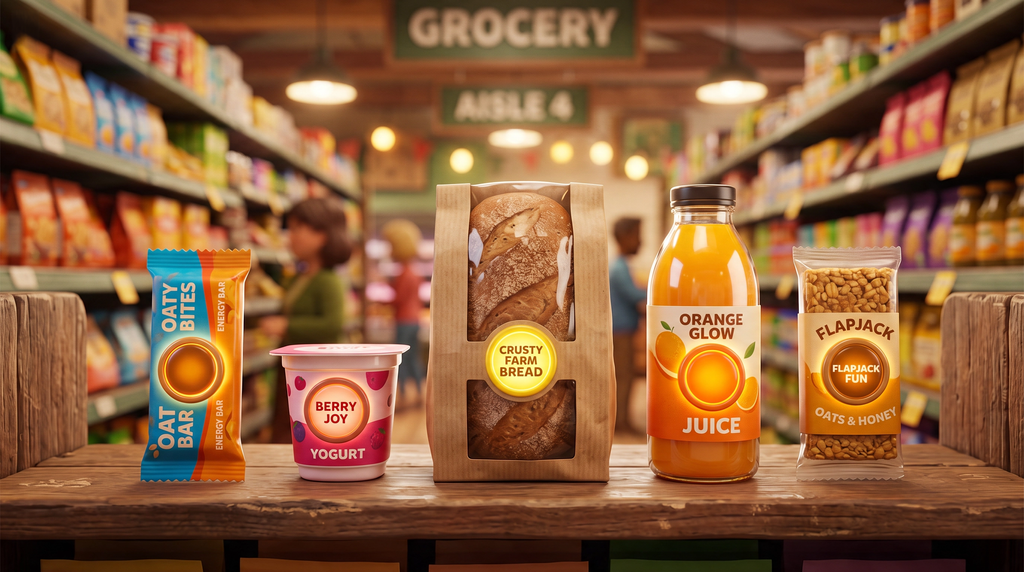
Protein marketing has moved well beyond shakes and bars. Flapjacks, yoghurts, bread, ready meals, foods that never used to carry a protein claim, are now stamped ‘source of protein’ or ‘high in protein’, sometimes just highlighting protein that was already there, sometimes because it’s been added.
There’s a real rule behind these claims. Under UK food labelling regulations, a product can only be labelled a ‘source of protein’ if at least 12 percent of its calories come from protein, and ‘high protein’ if at least 20 percent do, a genuine legal threshold, not just marketing language. But that threshold only ever looks at one nutrient. It says nothing about the sugar, saturated fat, or anything else in the product overall. A product can legally carry a ‘high protein’ claim while the rest of what’s in it tells a very different story.
That gap is exactly why protein gets marketed so heavily. One positive claim on the front is enough to make a product feel healthier overall, even though it only tells you about a single nutrient, something researchers call the health halo effect: studies on protein bars specifically have found that a protein claim alone was enough to make people rate the whole product as healthier, without checking anything else on the label. A ‘high protein’ cereal bar might carry ten or eleven grams of protein, a similar amount of added sugar, and noticeably more calories than two boiled eggs or a small pot of natural yoghurt offering a comparable amount of protein, and the claim on the front never mentions any of that.
None of this makes protein a problem. It just means a ‘high protein’ label is telling you about one nutrient, not the whole product. Worth turning the pack over and checking the rest of the label too.
The 30-minute post-workout myth
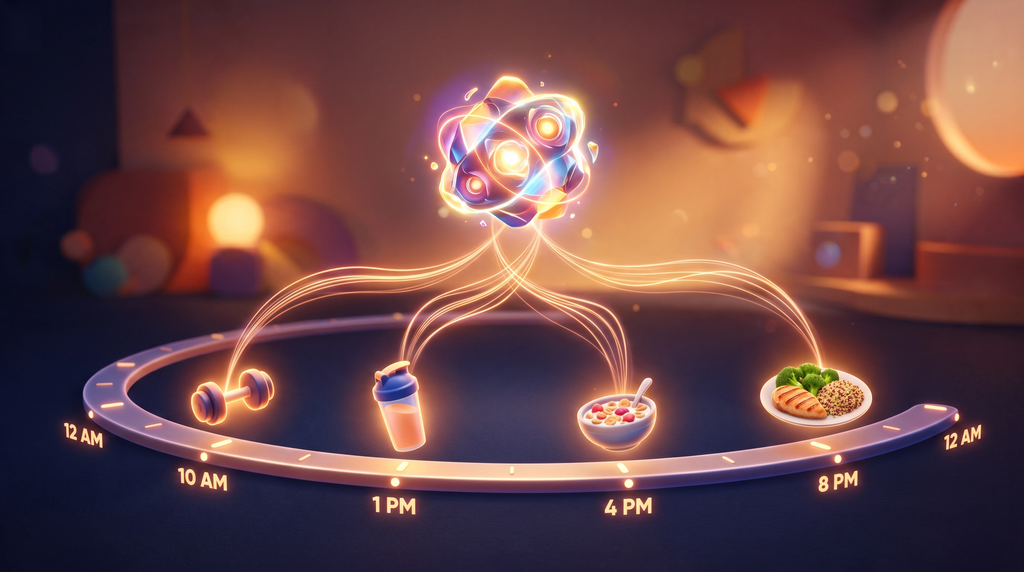
You’ve probably heard you’ve got thirty minutes after a workout to get protein in, or the session’s wasted. That strict window isn’t backed by the evidence, not nearly as tightly as the myth suggests. A 2013 meta-analysis in the Journal of the International Society of Sports Nutrition (Schoenfeld, Aragon and Krieger) pooled data from dozens of training studies on this exact question. Once researchers accounted for how much protein people ate across the whole day, timing made no meaningful difference to muscle strength or growth. Total protein intake was the strongest predictor, not the clock, spreading it across your meals matters more than any thirty-minute window. So if you miss that post-workout shake, your session isn’t wasted.
Conclusion

Protein matters every day, for everyone, not just people who train. Most UK adults already get enough of it. Animal and plant protein both genuinely work, they just come with slightly different practical considerations, not a hierarchy of better and worse. Front-of-pack claims are legally real but narrow, they tell you about one nutrient, not the whole product. And timing gets far more attention than the evidence actually supports, total daily intake is what does the work.
This content is for educational and informational purposes only and does not substitute for professional medical advice, diagnosis, or treatment.